
When to repair hail damage on your tile roof
Last updated: May 2026
Hail attacks your home as chunks of ice, and roof damage can lead to costly repairs, especially if you don’t catch it early.
In Queensland summer storms, hail varies in size and velocity. Your windows are the most obvious risk during a hailstorm, but your roof is the first line of defence. In this blog, we’ll discuss what hail is, how it impacts your roof, how to prepare your home to prevent damage, and what the steps are when your roof is hit.
What’s hail, and why does it impact your roof?
- Frozen precipitation can cause significant damage to buildings, roofs, and motor vehicles.
- A marble-size hailstone is estimated to drop at 32 km/hr, but cricket-ball size and larger hail can exceed speeds of 200 km/hr.
- Australian hailstorms have cost cities millions and even billions in repairs.
- Regular roof maintenance massively reduces your risk of hail damage.
- ALWAYS check your roof after hail – don’t assume it’s fine.
- The earlier damage is fixed the better, so make sure to call us at Bayside Roof Restorations as soon as you spot it.
Hail forms very simply.
When temperatures are freezing, hailstones form around minuscule nuclei moving through the sky, such as droplets of water or a dust particle. This nascent hailstone is carried high through the clouds and will freeze swiftly and expand in size. It will pick up additional moisture from water vapour and rain as it is hurled by wind lower into the atmosphere, then it will be grabbed by the storm currents again and will re-freeze.
The stronger the wind in the storm, the longer the cycle between circling back and forth from freezing to non-freezing temperatures, thus growing in size. Eventually, the hailstone plummets to land below, causing damage to anything in its path such as buildings, roofs, and vehicles.
Bayside Roof Repairs & Restoration did a stellar job. Todd and his crew were professional, supportive and left us feeling secure for the Summer Storm season about to hit. Many tiles replaced and a new look house. – Darren – Google Reviews
What have been the major hailstorms in Australia?
Hailstorm damage can have a major effect on a family – the physical home and the financial situation. Hailstorms occur more frequently between September and March in Australia. Sometimes these storms create large hailstones which can cause extreme damage. This means extensive repairs are needed to the property.
Over a third of Australia’s total natural event insurance losses (1968-2005) were caused by hail!
Cricket ball size hail dropped from the sky on 14 April 1999 in Sydney. The most sizeable hailstone measured 9cm in diameter. Sydney was bombarded by hail at speeds up to 200km/hr. An estimated 500,000 tonnes of hail fell from this storm. This particular storm affected 130,000 people, damaged over 20,000 buildings and 40,000 motor vehicles. Insurance claims totalled over A$1.7 billion, but the total damage bill was estimated at approximately A$2.3 billion. A state of emergency was declared by the State Government. As far as natural disasters go, this storm is still one of Australia’s most expensive.
$1.05 billion in damages were caused by a catastrophic storm (hail, torrential rain, and flood) in Perth, Western Australia in 2010.
Another major hailstorm affected Sydney in December 2018. The damage was estimated at $798 million.
How major are hailstorms in Southeast Queensland?
$60 million in damages were caused by hail on Queensland’s Gold Coast in 2005.
$1.1 billion in damages were caused by a hailstorm in Queensland’s capital Brisbane in November 2014. The storm only lasted 30 minutes, but 39 people were injured and 12 hospitalised. Recorded wind speeds at 141 km/hr. 2000 homes sustained roof damage, 100,000 cars were damaged and planes were flipped over at airports.
Southeast Queensland sustained another immense battering in November 2019. The Insurance Council of Australia (ICA) labelled this hailstorm a catastrophe. The severe storm affected Southeast Queensland, predominantly the Sunshine Coast region. Combined damaging winds and giant hailstones resulted in estimated initial losses of $120 million.
In 2023, Southeast Queensland was hit by two major storms in December alone. Houses lost roofs, powerlines fell, and countless trees were uprooted, causing a major cleanup throughout the region.
You can read more here: https://en.wikipedia.org/wiki/Severe_storms_in_Australia#Queensland
Southeast Queensland saw an estimated $3.5 billion in storm damages in 2025. Roofing experts like us at Bayside Roof Repairs and Restorations were called out to help with the estimated 100,000+ insurance claims made. This is why it’s so important to be prepared, both with insurance, a well-maintained roof, and a plan of action in case of emergencies.
How can you protect your home?
Be prepared. To minimise damage in a hailstorm and prevent roof repairs:
- Be aware and know the risks (the Bureau of Meteorology can provide weather warnings and storm history in your region)
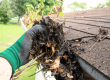
- Clear debris from down pipes and gutters
- Trim over-hanging branches
- Keep yard and balcony clear of loose items that could become projectiles
- Make sure your roof is in good order – correctly installed and maintained
- Make sure the gutters are in good order
- Ensure you have adequate levels of building and contents insurance cover for your home against financial loss from hailstone damage.
Of course, these must be done prior to the start of a storm. Another option is to reinforce your home with hail-resistant roofing materials.
What’s the impact of a hailstorm on properties?
The degree of hailstone property damage depends on many factors:
- Intensity, frequency, and severity of the storm
- The velocity of hail impact, and size, density, and shape of the hailstone
- Speed of the wind and direction
- The building’s exposure and vulnerability to hail
- Barriers (neighbouring structures and natural trees, etc)
- Roofing material toughness (old roofs or poor quality materials are more likely to sustain hailstone damage)
Whether big or small, hailstones cause costly and serious destruction and damage to your roof. The main structural damage that can be caused by hail are:
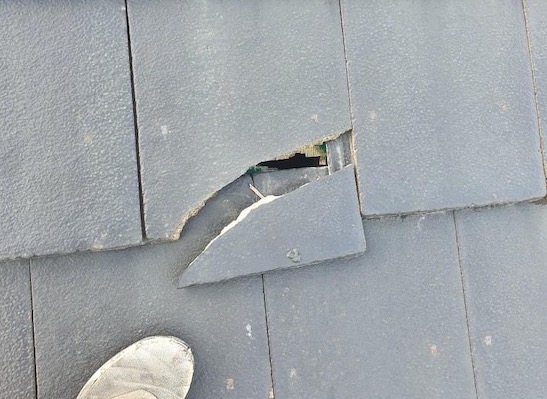
- cracked roof tiles
- metal sustaining permanent indentation,
- glass damage and,
- hailstone buildup in the gutters
Don’t assume your roof is okay after a hailstorm. Always check again.
Don’t Ignore Damage from Hailstorms. Why?
Ignoring roof hail damage can lead to significant implications. Hail can damage your property and reduce your roof’s lifespan, forcing you to incur unexpected expenses on extensive home repairs. Inspect your roof regularly and repair any damage promptly.
A decent percentage of houses impacted by hailstorms are never inspected for damage because the owners do not know what to look for and can not identify the damage. In many cases, the insurance company may pay for roof repairs or replacement, gutters and siding when assessed properly and the claim is lodged within the time period.
What are the hail damage signs on your roof?
After a hailstorm it is important to check for any damage to your property that may have resulted from the wind or hailstones. Be thorough when inspecting the roof for hailstone damage. Minor damage found early will save you money and headaches down the track.
Remember, any problems that go undetected will become worse and more costly to fix as time goes on. That’s why it’s worth it to hire an experienced roofing company like Bayside to inspect your roof. If you are tech-savvy, use a drone to assess your roof for hail damage. Take pictures and videos from angles that you wouldn’t normally see from climbing up on the roof yourself.
Check skylights, vents, and chimneys on the roof for hail damage.
Check for breaks and cracks if your roof has skylights.
Check any roof vents for chips, dents and dings.
Check the metal flashing around the chimney.
TIP – run chalk sideways over the surface to identify hail impact points.
Check gutters for damage.
Check for denting or dimpling (metal) or punctures and cracks (vinyl).
Check for tears or deformities in gutter leaf guard or gutter screens (metal or plastic).
Check for shingle granule buildup in your gutters; this could mean hail damage to your roof shingles.
Hail damage to different roof types
Roofing materials respond to and absorb hailstone impact in different ways.
Hail damage to Metal or Aluminium roofing
- Look for dings and dents from hailstone impact (chalk sideways on the roof surface)
- Look for deeper cracks and punctures from bigger hailstones
Hail damage can be serious on a metal roof; it can lead to corrosion, leaks, and structural weak points.
Hail damage to Concrete, Clay, and Slate roofing
- Look for gouges or cracks from hailstone impact
- Look for broken tiles
My Tile Roof has Hail Damage. What Now?
What are the repair costs, and will insurance cover them?
The cost of hail damage repairs depends on how many tiles are cracked, whether ridge capping or pointing has been damaged, roof access, roof pitch, and whether leaks have affected internal areas. Minor repairs may be relatively straightforward, while widespread storm damage may require larger restoration works. A professional inspection is the best way to understand the true scope and cost. If you are insured, you should be able to make a claim for hail damage.
What should you do while waiting for professionals?
If your roof has been damaged and repairs cannot happen immediately, use buckets to catch internal leaks, move valuables away from wet areas, and place towels down to reduce slipping hazards. If safe to do so, tarping by professionals may help reduce further water entry until permanent repairs can be completed.
But be cautious of risky DIY. Tile roofs can become slippery, fragile, and dangerous after storms. Walking on damaged tiles can cause further breakages or personal injury. Ground-level checks or drone photos are safer, with professional roofers best equipped for full inspections.
Contact Bayside
If you believe your tile roof has sustained damage from a hailstorm, it’s recommended to have a roofing professional inspect the roof thoroughly. They can assess the damage, and if the damage is extensive, you should be able to claim on your building insurance policy.
If you need a tile roof inspection or are not sure about hail damage (and you live in Brisbane North to the Sunshine Coast, Brisbane South to Logan, Brisbane Bayside, or Redlands) contact us at Bayside Roofing. We specialise in tile roof restorations and tile roof repair. We also have a tile roof maintenance service so we can check your roof on a regular basis. Plus, we offer tile roof & gutter painting and tile and metal roof cleaning for single-storey homes with roofs up to 2.4 metres to the gutter line.